
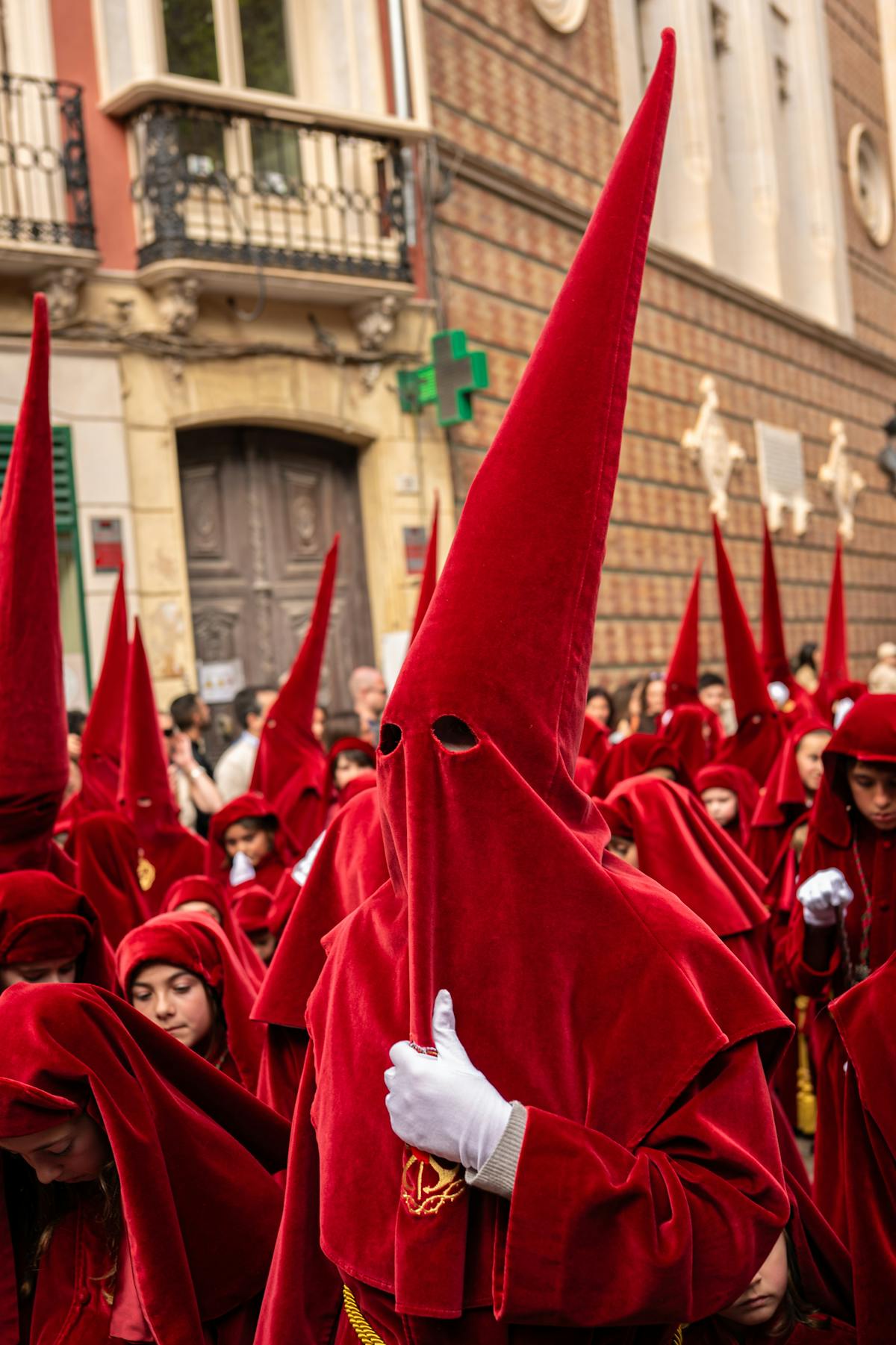
Easter in Valencia is one of the city's best-kept secrets for newcomers. While Spain's most famous Holy Week processions take place far to the south, Valencia has its own quietly remarkable tradition: the Setmana Santa Marinera, a maritime Holy Week rooted in the seafront neighbourhoods of Grau, Cabanyal and Canyamelar. It is intimate, walkable, and unlike anything you will find inland. This guide explains what Easter actually looks like in Valencia, when it happens, what is open and closed, where to go, and how a recently arrived expat can make the most of the long weekend, all in plain English.
If you have only ever heard of the dramatic, crowd-packed processions of Andalusia, Valencia will surprise you. Here, Holy Week feels less like a spectacle and more like a neighbourhood coming together. You can watch a procession wind through narrow maritime streets in the afternoon, hear midnight fireworks crack over the rooftops, and still find a quiet beach to walk on the next morning.
When Easter Falls (and the 2027 Dates)
Easter is a movable feast, so the dates change every year. Holy Week (Setmana Santa in Valencian, Semana Santa in Spanish) always runs from Palm Sunday to Easter Sunday, with the key days being Holy Thursday, Good Friday, Holy Saturday and Easter Sunday. The maritime processions cluster around the final days of the week and the Easter weekend itself.
In 2027, Holy Week in Valencia runs as follows:
| Day | Date (2027) |
|---|---|
| Palm Sunday (Domingo de Ramos) | 21 March |
| Holy Thursday (Jueves Santo) | 25 March |
| Good Friday (Viernes Santo) | 26 March |
| Holy Saturday (Sabado Santo) | 27 March |
| Easter Sunday (Domingo de Resurreccion) | 28 March |
The most concentrated days for processions and celebrations are Good Friday (26 March) and Easter Sunday (28 March). Easter Monday (29 March) is a regional public holiday in the Valencia region and a popular day for getting out into the countryside.
Public holidays to note: Good Friday is a national holiday across Spain, so banks, offices and many shops close. Easter Monday is a regional holiday in the Valencia region. Holy Thursday is a holiday in much of the country but is not always observed in the Valencia region, so check your local calendar before assuming a day off.
What Easter Looks Like in Valencia
If you live in the city centre, you might barely notice Holy Week beyond a few quieter mornings and some closed shops. The heart of Valencia's Easter beats in the maritime quarter, the cluster of seafront neighbourhoods known as Grau, Cabanyal and Canyamelar, a short tram or bike ride from the centre. This is where the Setmana Santa Marinera unfolds.
Over the course of Holy Week, the brotherhoods (cofradias and hermandades) of these neighbourhoods carry religious images through the streets in solemn processions, accompanied by drums, brass bands and rows of robed participants. Unlike the grand cathedral parades elsewhere in Spain, these feel rooted in the community: families watch from balconies, neighbours greet each other along the route, and the whole thing has the warmth of a local tradition rather than a tourist event.
What is the Setmana Santa Marinera? It is Valencia's distinctive maritime Holy Week, born among the fishermen of the seafront neighbourhoods. The tradition reaches back centuries and was shaped by the men and women who made their living from the sea, which is why its imagery, prayers and ceremonies are so tied to the water. It gives Valencia's Easter a character you will not find in any inland Spanish city.
A recurring theme is the connection to the sea. One of the most moving moments of the week is a ceremony in which a wreath is cast into the water in memory of those who have died at sea, a quiet reminder that this is a celebration shaped by the rhythms and risks of a fishing community.
How It Differs From Seville and Malaga
Andalusia, and Seville and Malaga in particular, host the most famous Holy Week processions in Spain. They draw enormous crowds, last deep into the night, and can feel overwhelming in scale, with hooded penitents, towering floats and a sense of high drama. People travel from across the world to witness them.
Valencia is the opposite end of the spectrum, and that is its charm. The celebrations are smaller, more contained, and concentrated in a single part of the city. You will not be fighting through dense tourist crowds, and you do not need to plan your day around securing a viewing spot hours in advance. For a newcomer who wants to experience an authentic Spanish Holy Week without the intensity and logistics of the south, Valencia is a gentler, more accessible introduction.
It is also worth knowing that Valencia's emotional high point is not solemn at all. The week builds toward a joyful, almost carnival-like finale on Easter Sunday, when the mood flips from reflection to celebration. That shift, from quiet processions to flowers, music and fireworks, is something the southern cities do not do in quite the same way.
The Setmana Santa Marinera Processions
The processions and ceremonies follow a broadly similar pattern each year, though exact times and routes are confirmed closer to the dates by the organising brotherhoods. Here is what to look out for across the week.
Good Friday: the most solemn day
Good Friday is the emotional core of the week. Early in the morning, a ceremony in the maritime district honours those lost at sea, with images of Christ carried through the neighbourhood and a tribute made at the shore. Later in the day comes the Procesion del Santo Entierro (Procession of the Holy Burial), one of the most attended events of the entire Setmana Santa Marinera, in which all the brotherhoods process together through the streets of Cabanyal and Canyamelar. Expect a large, quiet, respectful crowd lining the route in the evening.
Heads up: Expect street closures throughout the Cabanyal and Canyamelar area from the afternoon into the evening on procession days, especially Good Friday. If you live in or need to travel through these neighbourhoods, plan to walk and allow extra time.
Easter Sunday: midnight fireworks
True to Valencia's love of pyrotechnics, Easter Sunday traditionally begins at midnight with fireworks displays in the maritime quarter to mark the resurrection. If you know Valencia for Fallas, this will feel familiar: thunderous booms, whistles and colour over the rooftops near the Mercat del Cabanyal. The displays usually run in the small hours of Sunday morning, so it is worth staying up or wandering down to the seafront late on Saturday night.
Easter Sunday: the Resurrection Parade
The grand finale is the Desfile de Resurreccion (Resurrection Parade), usually held around midday on Easter Sunday. This is where the week's solemnity gives way to pure celebration: biblical characters walk through the maritime streets, bands play cheerful music, and flowers are thrown to the crowd instead of the sombre imagery of earlier days. It starts in the area around the Mercat del Cabanyal and winds through the neighbourhood. The atmosphere is joyful, colourful and unmistakably Valencian.
Another local custom worth knowing is the Trenca de Perols (Breaking of the Pots), a noisy, festive tradition full of fireworks and community spirit that helps round off the week.
Want daily updates like this?
1,100+ expats in Valencia get local news, events, and practical tips in English - every day, free.
What Is Open and Closed
Easter is one of the times of year when Spanish opening hours catch newcomers out, so it pays to stock up in advance. The pattern is broadly the same every year, even though exact store hours vary by branch and are set close to the dates.
- Good Friday is a public holiday. Many supermarkets close or run reduced hours. The bigger chains such as Carrefour and Lidl are the most likely to open, often on a Sunday-style schedule, while Mercadona frequently limits its hours or only opens in tourist areas. Banks and many independent shops are closed.
- Holy Saturday is usually close to a normal Saturday, with most supermarkets open, though it is always worth checking your nearest branch.
- Easter Sunday is the quietest day of all. Most supermarkets are closed, so do your shopping beforehand.
- Bars, restaurants and tourist-area shops generally stay open throughout the week, so you will never go hungry, but groceries are the thing to plan around.
Pro tip: Do your big shop on Holy Thursday. Treat Good Friday and Easter Sunday as days when you may not be able to nip out for forgotten ingredients, and you will avoid the classic newcomer scramble for an open shop.
Getting Around
During the main procession days, parts of the maritime quarter close to traffic. Tram services that run through the Cabanyal and Canyamelar area are sometimes interrupted in the evenings to accommodate the processions, with the seafront stops most affected. If you are heading to or from the beach neighbourhoods on a procession evening, check the latest service notices and allow extra time.
If you are going to a procession: The maritime neighbourhoods are compact and very walkable. The easiest approach is to take the tram or metro to a nearby stop and continue on foot, rather than trying to drive or park close to the route. Once you are there, everything is within strolling distance.
Family Activities
Easter coincides with a school holiday in Spain, so the city and regional government usually lay on a programme of children's activities. The exact line-up changes each year, but the same kinds of events return, and most are free or low-cost. These are some of the reliable options to look for.
Activities in the natural parks
The regional government (the Generalitat) typically runs a large Easter programme of free activities across the Comunitat Valenciana's natural parks, including guided walks, wildlife watching and nature workshops. It is a great way to get the family out of the city for a few hours. Registration is usually required, so book ahead.
Museum and art workshops
Valencia's museums often schedule family programming over Easter. The IVAM (the modern art museum) tends to run guided family tours, including sessions adapted for very young children, while the Centro de Arte Hortensia Herrero usually offers explorer-style trails and puzzles for older kids and gentle sensory sessions for babies and toddlers. Most carry a small fee and require booking.
City-run children's activities
The city council typically organises free children's events during the holiday, often with a sustainability or storytelling theme, including escape-room style games and workshops. Keep an eye on the council's culture and youth listings as the dates approach.
Beyond the City
If you want to broaden the experience, the wider region offers some memorable Easter traditions a short trip from Valencia.
Resurrection encounters in the towns
Several towns around Valencia, such as Torrent to the south, hold their own Easter Sunday ceremonies in which images of the Resurrected Christ and the Virgin symbolically meet in the main square. These are warm, local celebrations and a good way to see how Easter is marked outside the city.
The Picassent prison procession
One of the most unusual Easter traditions in all of Spain takes place inside the prison at Picassent, south of Valencia, where a brotherhood holds an annual Via Crucis that allows inmates to take part in a procession with the traditional stations. It is widely described as the only procession of its kind held inside a Spanish prison during Holy Week, and it has run for many years.
Easter Monday in the countryside
Easter Monday is a regional holiday and, by tradition, a day for getting outdoors. Many Valencian families head to the countryside or the coast for a picnic, often flying small kites and eating the traditional Easter pastry, the mona de Pascua, a sweet bread or cake often topped with an egg. Joining in is one of the easiest ways to feel part of local life.
Fire safety: Spring countryside outings come with a standing reminder. If there is a dry spell, the region restricts open fires and barbecues. If you are out in nature and see smoke or flames, call 112 straight away.
Insider Tips for Newcomers
- Go to the maritime quarter, not the city centre. The real Easter atmosphere is in Cabanyal, Canyamelar and Grau. If you stay in the centre expecting a spectacle, you may wonder where everyone is.
- Stay up for the Easter Sunday fireworks. The midnight displays near the Mercat del Cabanyal are a highlight and far less crowded than the daytime parade.
- Arrive early for the big processions. Good Friday's evening procession draws a large crowd. Get there ahead of time, find a spot along the route, and be ready for street closures.
- Shop before Good Friday. Treat the long weekend like the holiday it is and stock your fridge in advance.
- Pace yourself. Valencia's Easter is a marathon of quiet mornings, solemn afternoons and a joyful finale. You do not need to see everything, so pick the moments that appeal and enjoy them properly.
- Learn the two names. Locals may say Setmana Santa (Valencian) or Semana Santa (Spanish). Both mean Holy Week, and using the Valencian form goes down well in the maritime neighbourhoods.
FAQ
When is Easter in Valencia in 2027?
Holy Week 2027 runs from Palm Sunday on 21 March to Easter Sunday on 28 March. The key days are Holy Thursday on 25 March, Good Friday on 26 March, and Easter Sunday on 28 March. Easter is a movable feast, so the dates shift every year.
Are Easter days public holidays in Valencia?
Good Friday is a national public holiday across Spain, so most offices, banks and many shops close or run reduced hours. Easter Monday is a regional public holiday in the Valencia region. Holy Thursday is a holiday in much of Spain but not always in the Valencia region, so check your local calendar.
What is the Setmana Santa Marinera?
The Setmana Santa Marinera is Valencia's distinctive maritime Holy Week, rooted in the seafront neighbourhoods of Grau, Cabanyal and Canyamelar. It dates back centuries and was shaped by local fishermen, which gives the processions a community, neighbourhood character rather than the grand cathedral spectacle of inland Spain.
How does Easter in Valencia compare to Seville or Malaga?
It is quieter, smaller and more local. Seville and Malaga draw huge crowds and stage some of the most famous processions in Spain, while Valencia's celebrations are concentrated in the maritime districts and feel more like a neighbourhood tradition. If you want intensity and scale you travel south, but if you want something walkable and unhurried, Valencia is easier to enjoy.
What is open during Easter in Valencia?
Good Friday sees many supermarkets close or run reduced hours, with the larger Carrefour and Lidl style stores most likely to open and Mercadona often limited. Easter Sunday is the quietest day, when most supermarkets are closed. Bars, restaurants and tourist-area shops generally stay open throughout, and Holy Saturday is usually close to normal.
Are there family activities in Valencia at Easter?
Yes. The city and regional government usually run free or low-cost Easter programmes for children, including activities in Valencia's natural parks, museum workshops at venues such as the IVAM and the Centro de Arte Hortensia Herrero, and storytelling and escape-room style events. Most require advance registration, so book ahead where you can.
Do I need a ticket to watch the processions?
No. The Setmana Santa Marinera processions take place in the open streets of the maritime quarter and are free to watch. You simply turn up along the route. Expect street closures around the Cabanyal and Canyamelar area during the main processions, so go on foot and arrive early for a good spot.
Don't miss what's next in Valencia
Join 1,100+ expats who get daily local news, events, and practical tips - in English, every day, free.