
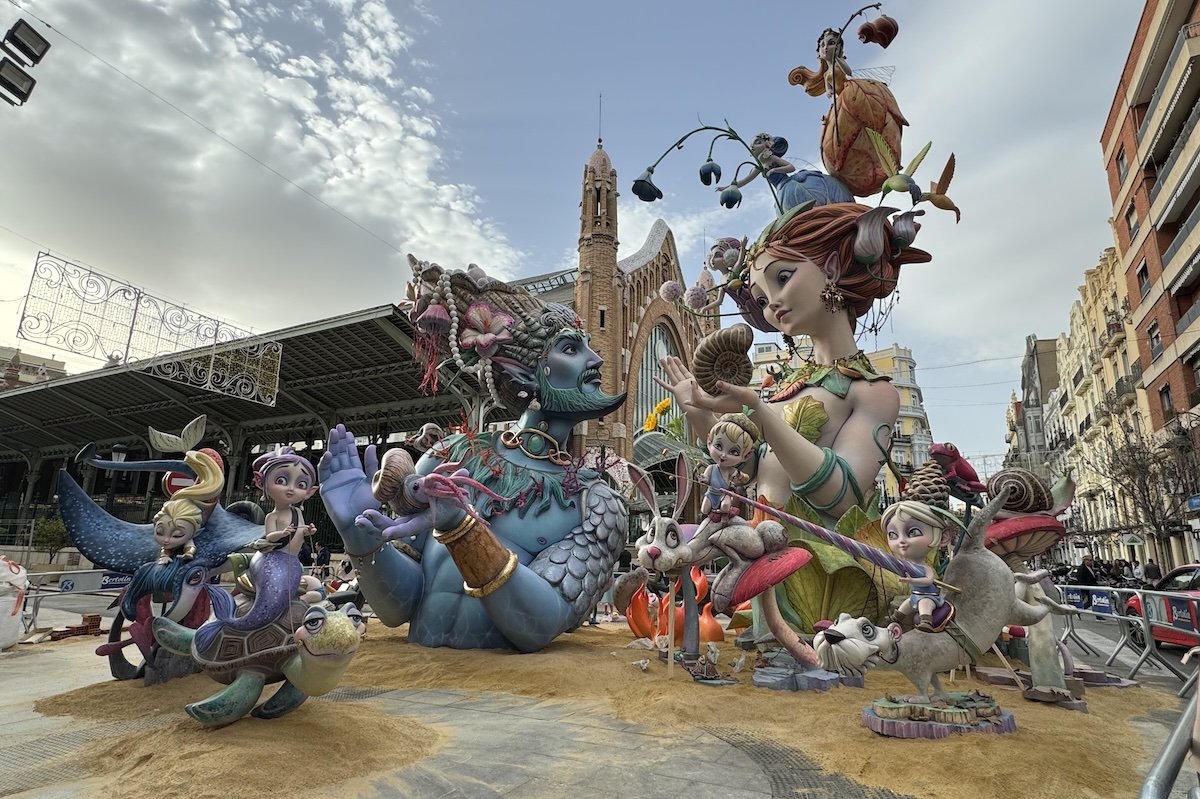
What is Fallas?
If you're new to Valencia, Fallas (Les Falles in Valencian) is the city's biggest festival - and one of the largest in all of Europe. Recognized by UNESCO as Intangible Cultural Heritage, it runs from March 1 to 19 every year, though the final five days (March 15-19) are when things really take off.
At its core, Fallas is about building massive artistic monuments - often satirical, sometimes political, always impressive - and then burning them all on the final night. Hundreds of neighborhood groups (comisiones falleras) spend months (and tens of thousands of euros) creating these works of art, only to set them on fire in a spectacular ritual called La Crema.
But Fallas is much more than the burning. Expect daily firework shows that shake your windows, flower parades, street parties, all-night verbenas, churro stands on every corner, and a general atmosphere of organized chaos that takes over the entire city for nearly three weeks.
First timer? Don't confuse the name: "fallas" refers both to the festival itself and to the individual monuments that get built and burned.
Things Nobody Tells You Before Your First Fallas
- Close your windows. Starting March 1 and especially March 15-19, keep all windows shut if you live anywhere near a falla monument. Ash, smoke, and noise will get in.
- Don't hang laundry outside. Your clothes will smell like gunpowder for days.
- Move your car. If you park on the street near a falla, move it before March 15 or you may not be able to get it out until the 20th. Vehicles have been damaged by embers during La Crema.
- Sleep is optional. From March 15-19, firecrackers go off around the clock. The despertà (wake-up call) starts at 8:00 AM with marching bands and firecrackers through the streets. This is not a gentle wake-up.
- Your commute will double. Bus routes change, metro stations close, streets are blocked. Build in extra time for everything.
Key Figures for 2026
The 2026 edition brings some notable changes and fresh faces:
Falla Grande Artist
Alejandro Santaeulalia & Vicente Llacer
Theme: "Hope" - a message of peace amidst global conflict, with vibrant colors and interactive elements
Falla Infantil Artist
Mario Perez
Theme: "Valencia es Mou" - promoting sustainable mobility, built with eco-friendly materials
Municipal Fallas Budget
EUR 273,000 total
EUR 239,000 for the city's Falla Grande and EUR 34,000 for its Falla Infantil - this is just for the two official municipal monuments
Fallera Costumes Budget
EUR 125,000
For the Fallera Mayor and her court's traditional dresses, using certified silk and local artisans
Record Participation
128,675 falleros and falleras
A historic high - up 8,000+ from 2025. Women make up 56% of participants. 384 commissions will parade during La Ofrenda.
Seccion Especial
9 fallas, EUR 1.5M+ combined
Top budgets: Convento Jerusalem (EUR 260,000), L'Antiga de Campanar (EUR 200,000), Exposicion-Micer Masco (EUR 195,000)
The Falla Grande stands 27 meters tall across 225 square meters, featuring a Charlie Chaplin figure symbolizing reflection amid war. Part of its merchandise proceeds go to Incliva, a childhood cancer research initiative. Both 2026 monuments emphasize sustainability, using eco-friendly materials - the children's falla promotes sustainable mobility, reflecting Valencia's growing commitment to environmental responsibility in its cultural traditions. The Sustainable Fallas Award 2026 went to Borrull-Socors for their monument "Per ofrenar".
Economic Impact
EUR 733 million in sales
EUR 400 million in direct spending, 6,440 temporary jobs created. Over 1 million tourists expected during the festival.
Tourism Numbers
Hotel occupancy at 67%
Peak night March 18-19 at 76.7%. Average room price EUR 166. Flight searches to Valencia up 29.7% vs 2025.
Big Change for 2026: The Fallas Gala Moves to Roig Arena
For the first time in almost 20 years, the Fallas gala is changing venues. The 2026 edition moves to the Roig Arena, increasing capacity from the previous venue to 10,000-12,000 attendees. This is a significant shift - the gala is one of the most anticipated events of the Fallas season, and tickets have historically been impossible to get due to limited space. The larger venue is a direct response to years of overwhelming demand. The inaugural event at the new location was held on September 6, 2025, so the 2026 Fallas will be the first festival cycle to use it fully. If you've never been to the gala before, this might be the year to try - more seats means better odds.
2026 Dates and Schedule
While official dates for some events are confirmed closer to the festival, here's the established calendar based on tradition and confirmed details. The big events happen during the final week (March 15-19), known as la semana fallera.
Pre-Fallas (Late January - February)
| When | What |
|---|---|
| Jan 30 | Opening fireworks at Ciutat de les Arts i les Ciencies |
| Feb 1 - Mar 15 | Ninot Exhibition at Museu de les Ciencies - preview the figures and vote for the one to be saved from the flames |
| Feb 22 | La Crida - the official opening ceremony with the Fallera Mayor at Torres de Serranos, with fireworks and music bands |
March 1-14: Warm-Up
| When | What |
|---|---|
| Daily at 14:00 | Mascleta at Plaza del Ayuntamiento - the daily daytime firework/percussion show (ear protection recommended) |
| Weekends | Firework displays (castillos) in the evenings across different neighborhoods |
| Mar 1-14 | Street parties and verbenas begin in neighborhoods with falla commissions |
| Mar 13-14 | Drone show at Roig Arena - free 350-drone aerial light show. Three performances: Mar 13 at 00:15, Mar 14 at 19:30 and 23:00. Meet at the esplanade on Calle Angel Villena (Access C2). |
March 15-19: The Big Days
| Date | Events |
|---|---|
| Mar 14-15, 23:59 | L'Alba de les Fallas - 300+ fireworks launched simultaneously from every falla across the city. Pirotecnia Vulcano orchestrates from Plaza del Ayuntamiento. 2026 marks the 10th anniversary of L'Alba, coinciding with Fallas' UNESCO heritage recognition anniversary. |
| Mar 15 | La Planta Infantil - children's fallas are erected overnight. All monuments on display for judging. The Ninot Indultat (pardoned figure) is announced. |
| Mar 16 | La Planta - the big fallas go up. Awards announced. Fallera processions through the streets. |
| Mar 17-18 | La Ofrenda - flower offering to the Virgin of the Desamparados at Plaza de la Virgen. Over 120,000 falleras and falleros parade through the city over two days (a historic record of 128,675 registered), depositing flowers to create a tapestry featuring a dove design in white, red, and yellow carnations. Two routes: Calle de la Paz and Calle San Vicente. Starts at 15:30 each day, runs past midnight. |
| Mar 18 | Nit del Foc at 23:59 near Puente de Monteolivete - Pirotecnia Valenciana fires 1,000 kg of gunpowder in 18 minutes with 2,000 firing orders. Designed as a "castillo a la valenciana" - rhythmic, powerful, and designed to keep you engaged every second. Visible from across the city. |
| Mar 19 | La Crema - the grand finale. Children's fallas burn at 20:00, children's first prize (Espartero) at 20:30, municipal children's falla at 21:00. All large fallas at 22:00, first prize Seccion Especial (Convento Jerusalem) at 22:30, and the Falla Municipal in Plaza del Ayuntamiento at 23:00. Preceded by the Cabalgata del Fuego fire parade at 19:00 (route: Calle de la Paz to Plaza Porta de la Mar). |
Plan ahead: March 19 (San Jose / Father's Day in Spain) is a public holiday in Valencia. Most shops will be closed, but restaurants and entertainment venues stay open for the festivities.
Where to Watch
Mascleta (daily, 14:00)
Plaza del Ayuntamiento is the main venue. Arrive by 13:00-13:15 if you want a decent spot - it fills up fast. The mascleta is not about visual fireworks; it's a percussive, full-body experience designed to be felt as much as heard. Bring earplugs or noise-cancelling headphones.
Local tip: The side streets leading into Plaza del Ayuntamiento can be a better viewing position than the center of the square itself. You feel the reverberations bouncing off the buildings, and you can leave more easily when it ends. Regulars stand on Calle Barcas or Calle Correos and swear it sounds better there. Also: the mascletas on the final days (March 17-19) are the most powerful - if you can only go once, pick one of those.
How powerful are these things? The March 17 mascleta by Pirotecnia Mediterraneo - titled "Catarsis" - used 230 kg of gunpowder in 450 seconds and literally shattered the windows of the tourism office on the ground floor of City Hall. This is the second time Mediterraneo has broken City Hall windows (the last was in 2024). Cruz Roja attended to 57 people during the event - 39 for fainting, 5 for anxiety, and one person was hospitalized for a suspected heart attack. Attendees called it "the best mascleta I've ever seen." This is not a metaphor - bring ear protection.
La Crida (Feb 22)
Held at the Torres de Serranos, the medieval city gates. The Fallera Mayor officially opens the festivities from the tower. Over 100,000 people typically attend, so arrive early. The surrounding streets fill up with bands and fireworks afterwards.
Local tip: The Jardines del Turia (the old riverbed park) near the Torres gives you a slightly elevated vantage point and an easier escape route when the event ends. Getting out of the main crowd at Torres de Serranos after the show can take 30-45 minutes.
Ninot Exhibition (Feb 1 - Mar 15)
Held at the Museu de les Ciencies (City of Arts and Sciences). The 2026 edition featured 766 ninots from 382 commissions and drew over 80,200 visitors who cast 60,235 votes. Admission was EUR 4. The winner - the Ninot Indultat - joins the permanent collection at the Museo Fallero.
Local tip: Go on a weekday morning to avoid queues. The exhibition runs for six weeks, but most people rush to visit in the final days. Going in February means shorter lines and more space to actually appreciate the figures. Weekend afternoons are the busiest.
La Crema (March 19) Viewing Tips
- Best neighborhood view: Pick a smaller neighborhood falla where you can get closer without massive crowds. Ruzafa, El Carmen, and Benimaclet are popular with visitors.
- The big one: The Falla Municipal at Plaza del Ayuntamiento burns last, around 23:00. The plaza fills hours before - firefighters control the perimeter.
- Wear closed shoes. Hot embers, firecrackers, and ash are everywhere.
- Stay upwind. The smoke can be intense.
Insider strategy: The best way to experience La Crema is to pick 2-3 smaller fallas in one neighborhood and walk between them as they burn. The children's fallas start burning at 20:00, the large ones at 22:00 - so you have two hours to walk around, watch a children's falla go up, then position yourself near a bigger one nearby. The atmosphere is more intimate and you get to see the firefighters up close. Save Plaza del Ayuntamiento for the grand finale at 23:00 only if you're prepared for extreme heat and massive crowds. The balconies overlooking the plaza are the real VIP seats - if you know anyone who lives there, this is the night to cash in that favor.
Fallas are underway - stay in the loop
Daily Fallas coverage, schedule changes, and local tips for expats - delivered to your inbox every day, free.
Getting Around During Fallas
Getting around Valencia during Fallas requires some planning. In 2025, EMT buses carried 5.9 million passengers during the festival period. Here's what to know:
2026 transport alert: A Metrovalencia strike has been called for March 13-19 by the Spanish Union of Train Drivers (Semaf). Minimum service is set at 80% during March 15-19 and 75% on other days. Additionally, Renfe Cercanias lines C1 and C2 will terminate at Albal (15 km south of Valencia) instead of Estacion del Nord from 13:00-15:00 daily during March 13-19, affecting ~40,000 daily travelers. Emergency shuttle buses connect Albal to Torrent Avinguda and La Torre. Plan extra time for all public transport.
Metro (Metrovalencia)
- 168-hour continuous service confirmed from March 13 to early March 20 - 13,387 trips, 5.8 million seats.
- Station closures: Xativa and Colon stations close 12:30-14:30 daily (March 14-19) for mascleta safety. Pedestrian passage closed 12:20-14:30. Additional nighttime closures March 17-18 from 22:00-02:00. Use Bailen or Angel Guimera as alternatives.
- Free parking: 1,500+ free spaces at 18 surface stations. New dissuasive parking at Valencia Sud with 536 spaces and direct metro access.
- Bicycles, scooters, and fireworks are banned on the metro network March 13-19. 1,390 additional security personnel and 123 new staff deployed.
Renfe (Cercanias)
Renfe is providing 141,000 seats total for high-speed and long-distance trains, including 4,000 extra during festival week (750 Madrid-Valencia, 3,200 Barcelona-Valencia). However, Cercanias lines C1 and C2 terminate at Albal from 13:00-15:00 daily during March 13-19 - use the free shuttle buses to connect into the city.
Buses (EMT)
- 24-hour bus service March 15-19 with 33 modified routes, 3 million+ seats (340,000 more than usual), and 26 new electric buses.
- Many bus routes are diverted due to street closures around falla monuments. Check the EMT Valencia app for real-time route changes.
- New line 59 launched March 9.
Taxis
Taxi drivers are offering free rides on March 14 and March 18 (13:00-15:00) as a protest against VTC regulations. Good timing if you need to get around during the mascleta window.
Cycling
Valencia sets up secure bike parking areas during Fallas. Valenbisi (the public bike-share system) is an option, but be prepared for some bike lanes to be blocked by monuments or crowds.
Track La Ofrenda in real time: Download the Official Ofrenda App (search "Ofrenda Valencia" in your app store). It uses chip technology to track where each falla commission is in the parade route, and sends notifications about traffic disruptions along the way - very handy for planning your route on March 17-18.
Driving? Don't. Seriously. The city center has been closed to private vehicles since March 16 at 15:00 through March 20 at 04:00. Parking fines are EUR 200 in prohibited Fallas zones. If you must drive, use the free park-and-ride at Valencia Sud (536 spaces) or Metrovalencia's 2,700+ free spots at stations on the outskirts. Blue zone street parking is free from March 9 (09:00) to March 20 (09:00) citywide.
Safety and Crowds
Fallas 2025 saw 240 fewer incidents than the prior year, thanks to a large police presence - over 15,000 police operations during the key days. That said, a few million people in the streets means you should stay aware.
Security Measures
- Drone surveillance: Valencia's police drone unit monitors crowds and fireworks areas for safety and fire detection.
- Emergency crews: For La Crema, the Consorcio Provincial de Bomberos is deploying 408 personnel and 153 vehicles across the province after inspecting 525 monuments in 93 municipalities. They'll be stationed at ~300 monuments rated medium risk or above. Emergency 112 staffing is boosted 20% during Fallas week - on the nights of March 15 and 18, staffing increases by 100% and 114% respectively. 59 schools have enlisted fire department help, with 39 firefighters deployed in 13 teams.
- Puntos Violeta: Six anti-violence safety points are operational March 15-19, staffed by professionals at strategic locations. Extended hours at Plaza del Mercat (11:00-19:00). 47 nightlife venues are participating in a sexual violence prevention protocol. 15,000 drug-detection stickers are being distributed to help people test drinks, and a mobile support bus is stationed for potential assault victims.
- Firecrackers: They are everywhere - thrown in the streets, tossed from balconies. This is not exaggeration. Watch your step and keep children close. Illegal firecrackers remain a problem despite enforcement.
Firework Restrictions (New for 2026)
Private fireworks have specific time windows this year: March 8-13 only 22:00-07:30, and March 14-19 only 02:00-07:00. Jardin del Turia and all playgrounds are completely off-limits for private fireworks. Recommended quiet hours are 09:00-10:00 and 15:00-17:00. The Russafa neighborhood has launched a "No explotes las Fallas. Aqui no" responsible fireworks campaign.
Weather and Wind
New for 2026: a formal weather safety protocol with alert levels has been introduced. Events - including mascletas - can and do get canceled due to rain or high winds (the first mascleta of 2026 was canceled on March 5 due to Storm Regina, and a DANA system brought persistent rain March 10-12). On March 15, strong wind gusts caused cracks in a ninot on the 27-meter municipal Chaplin falla, which had to be removed for safety, and the security perimeter was expanded. A trident detached from the Almirante Cadarso Seccion Especial falla but was successfully reattached.
Forecast for the final days: March 17-18 have been clear with pleasant temperatures - ideal for the Ofrenda. March 19 (La Crema): morning clouds and possible mist, but skies expected to clear before the evening burnings. A slight chance of light rain in Valencia province, so bring a light umbrella just in case - but conditions should be favorable for the Crema. Check the Ayuntamiento's social media or the Junta Central Fallera website on the day for last-minute changes before heading out.
Personal Safety Tips
- Keep your phone and wallet in front pockets or a cross-body bag. Pickpockets thrive in dense crowds.
- Know your emergency exits when watching the Crema - fallas are large and the fire gets genuinely hot. Seriously: the heat from a large falla burning can be felt from 30+ meters away.
- Wear ear protection for mascletas - they regularly exceed 120 dB. Standard foam earplugs from any pharmacy (farmacia) work fine.
- If you have respiratory issues, the smoke from La Crema can be a problem. Avoid standing downwind of burning monuments.
Medical strike alert: A five-day medical strike coincides with the final days of Fallas 2026. Emergency services remain fully operational, but regular (non-urgent) medical appointments and care may be disrupted. If you need non-emergency medical attention, plan accordingly or call ahead.
The thing that surprises most visitors: Firecrackers are not just at organized events. During Fallas week, kids (and adults) throw petardos in the street constantly. You will hear bangs behind you, next to you, and occasionally under your feet. This is normal. It's unnerving the first time but you adjust. If it genuinely bothers you, avoid the streets between 13:00-15:00 (pre-mascleta chaos) and after 20:00 when things ramp up again.
Pets and Animal Welfare
Fallas is tough on animals. The constant fireworks and firecrackers cause extreme stress for dogs and cats.
- Keep pets indoors during mascletas (14:00 daily) and especially on March 18 (Nit del Foc) and March 19 (La Crema).
- Green scarf campaign: 3,500 green scarves are being distributed to dog owners this year to mark pet-friendly zones and raise awareness about noise impact.
- Sensory sensitivity kits: 600 kits are being distributed for people and pets sensitive to loud noise.
- Quiet hours: Recommended quiet periods are 09:00-10:00 and 15:00-17:00. Private fireworks are restricted to specific hours (see Safety section), but enforcement is spotty. Expect random bangs from early March through the 19th.
- Talk to your vet about anti-anxiety medication if your pet is particularly sensitive to loud noise.
Exhibitions and Culture
Ninot Exhibition (Feb 1 - Mar 15)
The six-week exhibition at the Museu de les Ciencies showcased 766 figures from 382 commissions, drawing over 80,200 visitors who cast 60,235 votes. New for 2026: a "Premi Ninot Divulgacio Cientifica" (science communication prize) and a "Premi Ninot Sostenibilitat" (sustainability prize) to "Tap i Tapo" from Falla Pintor Domingo - Guillem de Castro.
Ninot Indultat 2026: "Onirica"
The 2026 Ninot Indultat went to "Onirica", a powerful critique of war created by artist Pedro Santaeulalia for the Falla Sueca-Literato Azorin. It received 9,474 votes - the first time this commission has won the top prize for a large ninot. The Ninot Indultat Infantil went to the Falla Espartero - Gran Via Ramon y Cajal (artist: Zvonimir), part of "ARCA, el viatge de Pepet", with 9,190 votes out of 53,661 cast. Both figures will be preserved at the Museo Fallero.
Museo Fallero
Located on Plaza Monteolivete, this museum houses decades of pardoned ninots - a fascinating walk through Valencia's social and political history told through satirical art. Worth a visit any time of year, but especially relevant during Fallas season.
Looking for specific events? Our Pro subscribers get access to a full events calendar for Valencia - concerts, festivals, talks, and more, updated daily. Check it out here.
The Monuments Themselves
With over 300 fallas planted across the city, the streets become an open-air art gallery from March 15-19. Many commissions invest EUR 50,000 to 250,000+ in their monuments. The nine fallas in the Seccion Especial have a combined budget exceeding EUR 1.5 million.
2026 Seccion Especial Awards
Convento Jerusalem-Matematico Marzal (artist: David Sanchez Llongo) won first prize in Seccion Especial for the second consecutive year, with their EUR 260,000 monument "Redimonis!". In the children's category, Espartero - Gran Via Ramon y Cajal took the top prize.
The festival also saw controversy: artist Carlos Carsi left the Cuba-Literato Azorin monument unfinished just hours before the jury's visit, resulting in a last-place finish in Seccion Especial. Carsi publicly apologized on Instagram, citing burnout and financial struggles to keep his workshop running - reopening the debate about the intense pressure fallas artists face.
Record-Breaking Falla
The Falla Manuel de Falla-Tamarindos in Benimaclet became the longest falla ever planted in Valencia at 42.195 meters - a nod to the official marathon distance. Dedicated to the Valencia Marathon, it features intricate recreations of the finish line, runners, and the iconic blue walkway at the City of Arts and Sciences. Despite competing in the fourth category (not Seccion Especial), it drew massive crowds.
Accessibility: Audiodescription for Fallas
New for 2026: an audiodescription project developed by Vanessa Gumier provides detailed audio descriptions of falla monuments for visually impaired visitors, making the artistic experience more accessible.
Street Illuminations
Cuba-Puerto Rico has won Best Illuminated Street for the 8th consecutive year with their "Showllum" display featuring over 405,000 LED lights. The illuminated streets are a major attraction during the festival - many commissions invest heavily in elaborate light displays that turn their neighborhood into a spectacle after dark. Walk the streets after sunset to experience them at their best.
Morrissey vs. Fallas
In a moment that perfectly captures the intensity of Fallas: Morrissey canceled his Valencia concert at the Palau de les Arts, citing inability to sleep due to Fallas noise and calling himself in a "catatonic state" after driving from Milan. If even rock stars can't handle the noise, consider this your warning to bring earplugs and embrace the chaos.
Practical Tips
Food and Drink
- Churros and bunyols are essential Fallas food. In 2026 there are 165 licensed stalls across the city, operating from March 2 to 19 with over 700 inspections and 600 oil quality tests. Bunyols are the Valencian specialty - fried pumpkin doughnuts that you won't find outside of Fallas season. Expect to pay EUR 7-12/dozen for bunyols and EUR 5-10/dozen for churros.
- Gluten-free option: Churros Numerosos (Calle de Jesus / Pintor Benedito) offers olive oil-fried, gluten-free churros.
- Local favorites include Horchateria Daniel, Churros Numerosos, and the century-old bakery El Contraste near the Mercado Central. New this year: El Contraste has a limited-edition collab burger with Jenkin's, and Utopick Chocolates is selling "Bombetas PEIM!" chocolate bites with local liqueurs.
- Street food stalls and pop-up bars appear in every neighborhood with a falla commission.
Insider move: Many falla commissions sell food and drinks at their casal (neighborhood hangout) during Fallas week. The prices are lower than restaurants and the atmosphere is more authentic. Walk up to any casal with a bar and you'll be welcomed - it's how the commissions fund their monuments. This is where you'll find the real Fallas social scene.
School Calendar
Schools in Valencia close for the Fallas holiday period. If you have children, plan childcare or enjoy the festival as a family. Many children's fallas and events are designed specifically for younger audiences.
Verbenas (Street Parties)
Nearly every falla commission hosts verbenas - outdoor parties with live music, DJs, and drinks. These typically run late into the night (or early morning). Some of the best ones are in smaller neighborhoods where the atmosphere is more local and less touristy. Note that rain in 2025 forced several verbena cancellations - organizers prioritize safety, so always check the day-of schedule.
Bullfighting
The Fallas Feria Taurina takes place at Valencia's bullring during the festival. The bullring has undergone a EUR 1.2 million renovation completed in 2026 with improved safety and lighting. Whether or not you attend is a personal choice - this remains a divisive topic among both locals and visitors. Even if bullfighting isn't for you, the bullring is also hosting themed exhibitions and guided tours from March 7 to 19 - a chance to see the historic building without attending a corrida.
Useful Apps
- Official Ofrenda App (iOS and Android) - tracks fallas in real time using chip technology during La Ofrenda, sends notifications about traffic disruptions, and includes live broadcasts from A Punt. Last year 16,000 people used it. Search "Ofrenda Valencia" in your app store.
- Amparito - a new AI-powered virtual assistant available on WhatsApp that answers Fallas questions in 95+ languages. Ask her about schedules, traditions, where to go, or what to eat. Especially useful for non-Spanish speakers. Find her on Instagram (@amparito) or via WhatsApp.
- EMT Valencia - essential for checking real-time bus route changes during the festival. Many routes are diverted around falla monuments.
What to Wear
- Comfortable, closed-toe shoes - you'll walk a lot and the streets have debris, embers, and firecracker remnants.
- Layers - March weather in Valencia can range from 12 to 22 degrees C. Rain is possible (2025 was notoriously rainy).
- Don't wear your best clothes to La Crema - smoke, ash, and the occasional stray spark are guaranteed.
Fallas Beyond Valencia
While Valencia is the epicenter, the Fallas tradition extends to other areas:
- Torrent: A city just south of Valencia that hosts its own Fallas celebrations, including the "Arribada del Foc" fireworks festival. In 2025, pyrotechnics firm Hermanos Caballer put on a spectacular 12-minute show with over 1,400 shots.
- Cartagena: Las Fallas expanded to Cartagena in 2025 with fireworks, a giant paella for 3,000 people, parades, and concerts - aiming to boost tourism and the local economy.
- Across the Valencian Community: Many towns throughout the provinces of Valencia, Alicante, and Castellon celebrate their own Fallas, often with a more intimate, local atmosphere compared to the capital.
Already Looking at 2027
With record participation straining the current format, the city is already planning changes for 2027:
- Ofrenda may expand to three days - the current two-day format is struggling to accommodate the growing number of participants (128,675 in 2026).
- Later tent installation - the city council plans to push the setup of Fallas tents to around March 11-12, a week later than 2026, to reduce disruption to daily life in the neighborhoods.
Fallas Glossary
Key terms every visitor should know:
- Falla
- Both the festival itself and the individual monuments built and burned
- Mascleta
- Daytime percussion-fireworks show at 14:00 in Plaza del Ayuntamiento
- Ninot
- Individual figure within a falla monument
- Ninot Indultat
- The pardoned figure saved from burning by public vote
- La Crema
- The burning of all fallas on the night of March 19
- La Ofrenda
- Flower offering to the Virgin, with falleras parading through the city
- Nit del Foc
- "Night of Fire" - the biggest fireworks display, on March 18
- La Crida
- Opening ceremony at Torres de Serranos where the Fallera Mayor declares the festival open
- Fallera Mayor
- The elected representative who presides over the festival
- Comision Fallera
- Neighborhood group that organizes and funds a falla
- Planta
- The overnight setup of the falla monuments in the streets
- Cabalgata del Fuego
- Fire parade on March 19 with performers and pyrotechnics before La Crema
- Desperta
- Early morning wake-up call with firecrackers and marching bands through the streets
- Casal Faller
- The neighborhood meeting house where a falla commission gathers, eats, and celebrates
- Bunyol / Bunuelo
- Traditional fried pumpkin doughnut eaten during Fallas
- Verbena
- Outdoor street party with music, typically hosted by falla commissions
Before you go - want Fallas updates in your inbox?
Join 1,100+ expats who get daily Valencia news, Fallas coverage, and local updates - free, forever.