
What is Mare de Deu?
If you've only experienced Valencia during Fallas, the Mare de Deu weekend is going to surprise you. Mare de Deu dels Desemparats - "Mother of God of the Forsaken" in Valencian - is the city's patron saint, and her feast day is the most emotionally charged moment in the Valencian calendar. Where Fallas is fire, satire, and noise, Mare de Deu is reverence, family, and a kind of collective hush that takes over Plaza de la Virgen on Sunday morning.
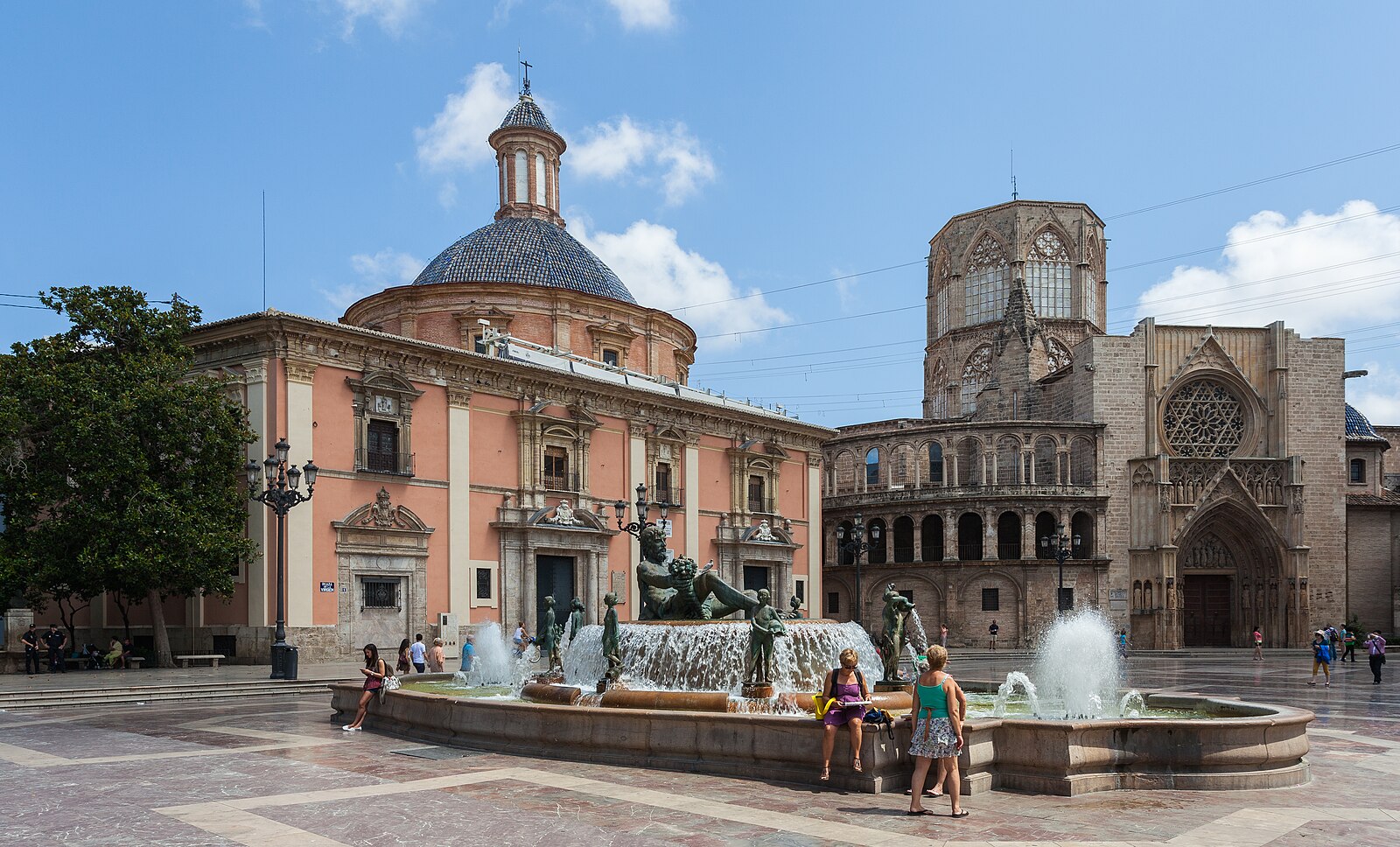
The festival is built around a small wooden image of the Virgin housed in the Real Basilica de la Mare de Deu dels Desemparats, just behind the Cathedral on Plaza de la Virgen. The image dates to the 15th century and is, for hundreds of thousands of Valencians, the literal mother of the city. She watches over the falleros during La Ofrenda in March; in May, she gets a weekend that belongs entirely to her.
The feast day falls on the second Sunday of May - Sunday, May 10, 2026. The full festival weekend runs Friday May 8 through Sunday May 10, with the centerpiece being a single short procession on Sunday morning called the Trasllat: the Virgin is carried from her Basilica, around the side of the Cathedral, and in through its Puerta de los Hierros - around 200 meters in total, through a packed Plaza de la Virgen. It lasts about fifteen minutes door-to-door. It is the most-attended event in Valencia outside of Fallas.
2026 note: Because of construction work on the Cathedral exterior, the Cathedral Chapter has modified this year's route. The Trasllat will not use the traditional Calle del Micalet. After the image leaves the Basilica and crosses Plaza de la Virgen, it now proceeds via Pasaje de Emilio Aparicio Olmo, Plaza de la Almoina, and Calle Barchilla, still entering the Cathedral through the Puerta de los Hierros. The Plaza de la Virgen experience itself - the doors opening, the applause, the mocadors raised - is unchanged.
First timer? Don't expect a Fallas-style spectacle. Mare de Deu is intimate and emotional - more like a wedding than a festival. The most powerful moment is a quiet one: the Virgin appears at the doors of the Basilica on Sunday morning and the entire plaza erupts in applause and reaches up to touch her as she passes overhead.
Things to Know Before Your First Mare de Deu
- Plaza de la Virgen is the center of everything. Almost every key moment happens there or starts there. If you're picking one neighborhood, base yourself in Ciutat Vella.
- The Trasllat is short. The actual procession from Basilica to Cathedral is about 10-15 minutes of movement - but the buildup and aftermath take all morning. Arrive early to get a good spot.
- Falleras participate. Many falleras and falleros wear traditional dress over the weekend - this is not just a March thing. The Falleras Mayores (the city's elected representatives) play formal roles in the ceremonies.
- It's quieter than Fallas, but not silent. Expect church bells, brass bands, applause, and tears. There is one Sunday mascleta (2:00 PM at Plaza del Ayuntamiento) and one Saturday-night castillo de fuegos (Plaza del Ayuntamiento, 11:59 PM) - but no week-long pyrotechnics like in March.
- Bring tissues. Even non-religious Valencians cry at the Trasllat. It catches everyone off guard the first time.
Key Dates for 2026
The official 2026 program runs from Friday May 8 through Sunday May 10, with smaller follow-up events on Monday May 11 and Wednesday May 20. The patron saint's feast day falls on Sunday, May 10. Sunday is the day you really must not miss; Saturday is the lively pre-day with concerts and fireworks; Friday is the quieter buildup.
| Date & Time | What's happening |
|---|---|
| Fri May 8, 4:30 PM | Bell-ringing of vespers from the Micalet (Cathedral bell tower) - the formal opening signal. |
| Fri May 8, 5:00 PM | Solemn first Pontifical Vespers at the Basilica, presided by the Archbishop of Valencia. |
| Fri May 8, 8:00 PM | Dansa infantil in Plaza de la Virgen - children's traditional dance with the Fallera Mayor Infantil and her court. |
| Fri May 8, 11:00 PM | Dansa with the falla commissions' dance groups and the Fallera Mayor of Valencia. |
| Sat May 9, 10:30 AM | Solemn Mass at the Basilica (the official liturgical feast day). |
| Sat May 9, 6:30 PM | Dansa with regional village dance groups in Plaza de la Virgen. |
| Sat May 9, 8:00 PM | Solemn Salve in the Basilica chapel (with the Escolania choir). |
| Sat May 9, 11:00 PM | Free concert by the Valencia Municipal Symphonic Band in Plaza de la Virgen, conducted by Miguel Vidagany. Premiere of a new processional march, "Mare dels Desamparats", composed for 2026 by Javier Forner Galbis. |
| Sat May 9, 11:59 PM | Fireworks (castillo) at Plaza del Ayuntamiento by Pirotecnia Caballer FX. |
| Sun May 10, 3:30 AM | Basilica doors open. Devotees start arriving for the Misa de la Descoberta. |
| Sun May 10, 5:00 AM | Misa de la Descoberta at the Basilica - the "Mass of Discovery" where the Virgin's mantle and ornaments are removed and she is shown in her simpler form. Open to anyone willing to queue. |
| Sun May 10, 7:30 AM | Bell-ringing from the Micalet ("vuelo del alba" - the dawn flight). |
| Sun May 10, 8:00 AM | Missa d'Infants (Children's Mass) in Plaza de la Virgen, presided by the Archbishop, with the Conservatori Municipal Jose Iturbi orchestra and the Basilica's Escolania. |
| Sun May 10, 10:30 AM | The Trasllat. The pilgrim image of the Mare de Deu is carried from the Basilica to the Cathedral, entering through the Puerta de los Hierros. For 2026 only, the route has been changed (Pasaje de Emilio Aparicio Olmo, Plaza de la Almoina, Calle Barchilla) because Cathedral works have closed the traditional Calle del Micalet path. The single most iconic moment of the weekend. |
| Sun May 10, 11:30 AM | Solemn Misa Pontifical at the Cathedral, presided by the Archbishop. The image is present. |
| Sun May 10, 2:00 PM | Mascleta at Plaza del Ayuntamiento by Pirotecnia Aitana - the daily fireworks/percussion show. |
| Sun May 10, 5:30 PM | Procesion General begins from the Cathedral. The falla commissions parade first, followed by religious entities, civic authorities, and the image of the Mare de Deu under canopy. See route below. |
| Mon May 11, 8:30 PM | Ronda a la Mare de Deu in Plaza de la Virgen. Organized by Fundacion Bancaja with city support. |
| Wed May 20, 6:30 AM | Public Besamano at the Basilica - personal blessing/touching of the image. Open queue until the last devotee passes. |
2026 special touches: The Plaza de la Virgen floral tapestry this year recreates the Basilica's baroque vault, marking the vault's 325th anniversary. Also new for 2026: the official premiere on Saturday night of the processional march "Mare dels Desamparats" by Valencian composer Javier Forner Galbis, and the launch of a new "Joves de la Mare de Deu" platform.
The Procesion General route (Sunday May 10, from 5:30 PM): Plaza de la Virgen → Caballeros → Tossal → Bolseria → Mercado Central → Maria Cristina → San Vicente → Reina → Mar → Avellanas → Palau → Almoina, returning to the Basilica. Pick a spot anywhere along this route to watch.
The Trasllat: The Heart of the Festival
If you do one thing in Valencia on Mare de Deu weekend, do this. The Trasllat ("translation" or "transfer" in Valencian) is the moment the wooden image of the Virgin is carried out of her Basilica, around the side of the Cathedral, and in through the Puerta de los Hierros for the solemn Sunday Mass. It happens once a year, starts at 10:30 AM sharp, takes about fifteen minutes door-to-door, and packs the plaza tighter than any other event in Valencia outside of the March 19 La Crema.
Route note for 2026: Cathedral exterior works have made Calle del Micalet unsafe for the kind of crowd this event draws, so the Cathedral Chapter has rerouted the procession this year. After leaving the Basilica and crossing Plaza de la Virgen, the image proceeds via Pasaje de Emilio Aparicio Olmo, Plaza de la Almoina, and Calle Barchilla before entering the Cathedral at the Puerta de los Hierros. The most charged moment - the doors of the Basilica opening, the applause, the mocadors raised in the plaza - is unchanged.
What actually happens
From around 9:00 AM, the plaza fills. Falleras in full traditional dress arrive in groups, escorted by their commission's brass band. The space in front of the Basilica is roped off; bell-ringers keep climbing the Miguelete tower; civic authorities take their positions. The energy is somewhere between a wedding and a stadium concert before the support act.
At the appointed moment, the Basilica's doors open. The image, on a small portable platform carried by porters, appears in the doorway. The crowd erupts: applause, cheers, hands raised. The image is held high and walked - very slowly, with several pauses - across the plaza.
The most photographed moment: as the Virgin passes overhead, people closest to the route reach up to touch the platform or to wave white embroidered cloths called mocadors. Older Valencians cry openly. Children are lifted onto shoulders. Brass bands play the Himne de la Coronacio (the Hymn of the Coronation) and the entire plaza sings along. Then the doors of the Cathedral close behind her, and the plaza slowly exhales.
The Solemn Pontifical Mass (11:30 AM)
Inside the Cathedral, the Archbishop celebrates the Pontifical Mass with the image present. This is largely closed off to non-attendees - getting inside requires arriving very early (5:00-6:00 AM at the latest) or having a personal connection. Most people experience it from outside via the bell ringing (the "vuelo de fiesta" at 12:00 from the Micalet) and the music spilling into the plaza.
After the Mass, the image stays at the Cathedral until the evening Procesion General (5:30 PM), when it processes back to the Basilica through the streets of the old town.
Where to Stand for the Trasllat
The plaza fills earlier than you'd expect. By 9:30 AM there's no good ground-level view left for newcomers. Here's how to think about it.
Best for atmosphere
Plaza de la Virgen, dead center
Arrive by 8:30 AM. You won't see much, but you'll feel everything.
Best for photos
Corner near the fountain
The Turia Fountain side gives you the Basilica doors and the Cathedral arch in one frame. Arrive by 8:00 AM.
Best for less crowd
The Cathedral entrance side
Slightly less packed; you see the image arrive but miss the moment it leaves the Basilica.
Best with kids or accessibility
Calle del Miguelete or a cafe terrace
Limited views but space to move. Some plaza-facing cafes take reservations specifically for this morning.
Pro tip: If you want to see the Virgin pass at eye level, the densest part of the route is right outside the Basilica doors and along the short stretch into Plaza de la Almoina. The crowd here is wall-to-wall, so plan to arrive an hour before the announced start and not move. Bring water.
Every Valencia event in your inbox, daily
Valencia Expat Daily: a 5-minute English digest of the day's local news, plus every event worth going to. Free, no credit card.
Other Key Moments
The Misa Descoberta (Sunday, ~5:00 AM)
The "discovered Mass" happens in the very early morning at the Basilica. The Virgin's mantle, jewelry, and crown are removed and she is shown in her plain wooden form. It is one of the most personal moments of the weekend, and it's open to anyone willing to queue from the night before. The Basilica is small; capacity is limited. Most attendees are devout regulars, but tourists are welcome to join the queue. Expect to be standing in silence for a long time.
The Procesion General (Sunday evening, from 5:30 PM)
The Sunday evening procession is the closing act of the weekend. Starting at 5:30 PM from the Cathedral, the falla commissions parade first, followed by religious brotherhoods (cofradies), civic authorities, the clergy, and finally the image of the Mare de Deu herself under canopy. The procession winds through Ciutat Vella along the route: Caballeros, Tossal, Bolseria, Mercado Central, Maria Cristina, San Vicente, Reina, Mar, Avellanas, Palau, Almoina, returning to the Basilica.
This is the more accessible of the two big Sunday moments. The crowd is dense but not impossible, and you can move along the route to get multiple views. Good spots: Plaza Redonda, the corner of Calle Mar, or any balcony along the route. The first commissions take time to pass; if you only want to see the Virgin's image, arrive at any point along the route around 7:30-8:30 PM.
Saturday Night: Salve, Symphonic Band & Fireworks
Saturday May 9 is the lively pre-day. At 8:00 PM the Basilica hosts the Salve solemne with the Escolania choir - free, no booking, the acoustics of the small chapel are extraordinary, but seats fill fast. At 11:00 PM the Valencia Municipal Symphonic Band plays a free concert in Plaza de la Virgen conducted by Miguel Vidagany; this year features the world premiere of a new processional march, "Mare dels Desamparats", composed for 2026 by Javier Forner Galbis. The night closes at 11:59 PM with a castillo de fuegos by Pirotecnia Caballer FX at Plaza del Ayuntamiento - a 10-minute fireworks finale.
The Falleras' Visit
Throughout the weekend, falleras from across the city visit the Virgin in small groups, often with their commissions' brass bands. They make brief individual offerings and prayers. You'll see groups of falleras crossing the old town in full dress all weekend - it's one of the few times outside Fallas week that traditional Valencian dress is widespread.
Traditions & Symbolism
The Mocador
The white embroidered cloth waved during the Trasllat - the mocador - is a centuries-old tradition. Many Valencian families have one passed down through generations, embroidered with the family name and the Virgin's monogram. Souvenir versions are sold in shops around Plaza de la Virgen during festival weekend, but the heirloom ones are the real thing - personal, sentimental, and brought out only for this one moment.
The Geperudeta
You'll hear Valencians refer to the Virgin as la Geperudeta - "the little hunchback." The name comes from the slight forward tilt of the wooden image, designed so it could be placed on a deceased person's chest during last rites. It is a tender, deeply Valencian nickname; locals use it the way they'd use the name of a beloved grandmother.
Traditional Dress
Many falleras and falleros wear full traditional Valencian dress for the weekend. The women's traje de fallera - silk brocade, heavy embroidery, distinctive hair styled in three buns and decorated with combs and ornaments - is one of the most elaborate regional costumes in Spain. It can take an hour to put on. Seeing dozens of falleras gathered in Plaza de la Virgen on Sunday morning is itself one of the visual centerpieces of the weekend.
The Hymn of the Coronation
The Himne de la Coronacio (Hymn of the Coronation) was composed in 1923 to mark the Virgin's canonical coronation. It is sung at every key moment of the weekend - the Trasllat, the Procession General, and at official Masses. Most Valencians know the words by heart. If you hear a hush fall over a crowd that then breaks into song, this is what you're hearing.
Food to Try
Mare de Deu doesn't have a single signature food the way San Isidro has rosquillas, but the weekend coincides with a few Valencian specialties that are easier to find now than at any other time.
Aigua de Valencia
Valencia's signature cocktail - cava, orange juice, gin, vodka, sugar - shows up at every bar and outdoor cafe terrace this weekend. It's not religious; it's just that the weather is perfect for it and the city is in a celebrating mood. Best enjoyed cold on a terrace in the old town. Classic spots: Cafe de las Horas (Calle del Conde de Almodovar), Sant Jaume (Calle Caballeros).
Horchata and Fartons
Mid-May is full horchata season. The traditional pairing is horchata (a cold drink made from tiger nuts) with fartons (long sugar-glazed sponge fingers, designed to be dipped). Classic Mare de Deu Sunday afternoon: horchata at Horchateria Santa Catalina (just off Plaza Reina, two minutes from Plaza de la Virgen) or Horchateria El Siglo. Family-friendly and very Valencian.
Sunday Paella
Mare de Deu Sunday is a major paella day, especially in the more residential neighborhoods. If you're not booked anywhere, head to Russafa or Cabanyal - the city-center restaurants get slammed. Authentic Valencian paella (rabbit and chicken, no seafood) is what to order; book ahead at Casa Carmela (Cabanyal) or La Pepica (the beachfront).
Pastries from the Festival Bakeries
Bakeries around Plaza de la Virgen and Mercat Central feature seasonal pastries through the weekend - look for pastissets (small sweet pastries with squash or sweet potato filling) and monas de Pasqua remnants if any are still around. Pastisseria Dulce de Leche, El Forn de la Tahona, and the bakery counter at Mercat Central all stock weekend specials.
Practical Tips for Expats
Getting there
Use the Metro or walk. Plaza de la Virgen is right in the center of Ciutat Vella; the closest Metro stop is Xativa (lines 3, 5, 7, 9) about an 8-minute walk away, or Angel Guimera (lines 1, 3, 5, 9). On Sunday morning, several streets in the old town will have rolling closures for the procession routes. Don't drive - parking around the old town is impossible all weekend.
What to wear
Mid-May in Valencia is warm but not yet hot - typically 22-26 degrees during the day, 14-17 degrees at night. Light layers. Comfortable shoes for the cobblestones. If you're attending an inside Mass, conservative dress is appreciated (covered shoulders, no shorts).
Cash vs card
Valencia is largely card-friendly, including most bars and restaurants. Carry a little cash for small bakeries and street stalls.
Language
Mare de Deu is celebrated almost entirely in Valencian (the regional language, very close to Catalan), though most clergy use a mix of Valencian, Spanish, and Latin during ceremonies. English signage at venues is limited. Useful words:
- Mare de Deu - Mother of God (in Valencian, pronounced "MA-reh deh DEH-oo")
- Desemparats - the Forsaken / the Helpless
- Geperudeta - "little hunchback"; an affectionate nickname for the Virgin
- Trasllat - the Sunday-morning procession from Basilica to Cathedral
- Mocador - the embroidered handkerchief waved during the Trasllat
- Falleres - women in traditional Valencian dress; visible all weekend
With kids
Mare de Deu is family-friendly but the Sunday morning Trasllat is too crowded for small children at ground level. Better options for families: the Friday 8:00 PM Dansa infantil in Plaza de la Virgen, the Saturday daytime events around the Basilica, the Saturday 11:00 PM Symphonic Band concert (kids welcome, plaza setting), and the Sunday evening Procesion General from 5:30 PM if your kids can stay up - moving along the route lets you watch from less crowded spots.
Avoiding the worst crowds
If crowds aren't your thing, skip the Sunday morning Trasllat entirely and aim for the Sunday evening Procesion General (5:30 PM onwards). Same image, same falleras, same brass bands - distributed over a much longer route along Caballeros, Mercado, San Vicente and Mar, so you can find a comfortable spot. The Saturday-evening concert in Plaza de la Virgen is also relatively easy to enjoy without arriving hours early.
Restaurants
Sunday lunch in central Valencia gets booked solid - especially anywhere within walking distance of Plaza de la Virgen. Reserve by Friday at the latest, or eat outside Ciutat Vella (Russafa, Cabanyal, Benimaclet are all good options).
Accessibility
Plaza de la Virgen has uneven cobblestones and gets very crowded; wheelchair access during the Trasllat is difficult. Easier moments: Saturday daytime (sparser crowds), the Saturday 11:00 PM Symphonic Band concert (large open plaza), the Procesion General (movable along a longer route), and the Saturday 8:00 PM Salve at the Basilica (seated indoors - arrive early to claim accessible seating).
FAQ
Is Mare de Deu a public holiday in Valencia?
The Sunday itself is a Sunday like any other. The Monday after (May 11, 2026) is sometimes a local holiday in Valencia city when it doesn't conflict with other rules - check the official municipal calendar for confirmation. Most workplaces operate normally.
Do I need a ticket for anything?
No. Every event in the official calendar - the Trasllat, the Procesion General, the Masses, the Symphonic Band concert, the dansa, the fireworks, the mascleta - is free and open to the public. You only need to arrive early enough to fit.
Can I take photos?
Yes, throughout the plaza and along the procession routes. Inside the Basilica during ceremonies, photography is technically allowed but discouraged - and it feels intrusive. Most people put their phones down for the actual Trasllat moment.
Is this related to Fallas?
Yes and no. The Virgin is the same one falleras offer flowers to during La Ofrenda in March - so there's continuity. But Mare de Deu in May is its own festival with its own logic: more religious, more intimate, less of the city-wide spectacle of Fallas. Many falleras participate in both.
What if I'm not Catholic or religious?
Most Valencians attending the Trasllat are not regular churchgoers. They come because the Virgin is, more than anything else, a symbol of Valencian identity. You don't need to be religious to find it moving. Just be respectful inside the Basilica and during quiet moments.
Where can I find the full official 2026 program?
The Archdiocese of Valencia publishes the official liturgical schedule a few days before. For an English-language summary of all the weekend's events, with confirmed times - and every other day's news and events in Valencia - join our free newsletter below.
Daily Valencia news in English. Free.
Join 1,100+ expats across Spain. Every morning: a 5-min summary of Valencia news, free events, and local recommendations - including complete Mare de Deu 2026 coverage.