What is the Gran Fira de Valencia?
The Gran Fira de Valencia, which the city council officially renamed the Feria de Julio again in 2026 (restoring the popular name Valencians have always used for it), is the city's big summer festival. It is not a single event but a whole month of them: concerts, parades, fireworks, bullfighting, theatre, children's shows and a sprawling funfair, all spread across July. It is one of the oldest civic festivals in Spain, running in some form since the 1870s, and for generations of Valencians it has simply been what July is.
If Las Fallas in March is Valencia at full volume, loud, smoky, overwhelming, the Gran Fira is the opposite mood. It is the city in a relaxed, warm-evening register: people drift out after the heat of the day to a concert in the park, a fireworks display by the river, or an open-air screening in a neighbourhood plaza. There is no single must-see moment and no countdown. You dip in and out of it across the month, picking the bits that suit you.
New to the city? Do not think of the Gran Fira as one event you need to "catch". Think of it as July's events calendar quietly filling up. The trick is simply knowing what is on each week, which is exactly the gap a good local newsletter fills.
Gran Fira 2027: Dates & What to Expect
The Gran Fira de Valencia runs for the whole of July. Recent editions have programmed close to 300 events, reaching 14 districts and several outlying neighbourhoods. It opens at the start of the month, the musical centrepiece (the Conciertos de Viveros) runs most nights through July, and the festival closes with the Batalla de Flores, traditionally on the last Sunday of the month. Around those anchors, the programme of mascletas, fireworks, parades and neighbourhood events fills the rest of July, and the funfair in the Turia gardens traditionally stretches into the first days of August. The Ajuntament de Valencia publishes the full day-by-day programme in late June and keeps adding to it, so treat the outline below as the backbone of the month and confirm exact dates and times for individual events in the official programme.
The festival opens with a free musical-symphonic gala in the Plaza del Ayuntamiento, usually late on the first night of July and capped with a fireworks display. It is the curtain-raiser the night before the Viveros concerts begin – a good free one to start the month with.
When
Throughout July 2027
Opening gala on the first night; Viveros concerts most nights through July; Batalla de Flores traditionally the last Sunday; funfair runs into early August.
Where
Across the whole city
Viveros gardens, the Turia riverbed, Paseo de la Alameda, and neighbourhood plazas.
Cost
Mostly free
Mascletas, fireworks and parades are free; Viveros concerts from €25.
Headline events
Batalla de Flores
The flower-float parade on the last Sunday of July is the traditional finale.
A typical Gran Fira July includes the open-air Conciertos de Viveros in the city's big central park, a string of Saturday-night fireworks displays, daily or near-daily mascletas (the rhythmic daytime firecracker shows Valencians love), the Feria de San Jaime bullfighting run at the Plaza de Toros around mid-to-late July, an international brass-band competition, parades, and the funfair in the old riverbed. The festival closes with the Batalla de Flores on the last Sunday of July. The Viveros line-up is usually announced first, in spring, with the rest of the neighbourhood programme rolling out through June.
Why It Matters If You Live in Valencia
Plenty of people who live in Valencia barely register the Gran Fira, because nobody hands you a programme when you arrive and the events are scattered. That is a shame, because for residents this is genuinely one of the best months of the year, and most of it costs nothing.
- It is free, outdoor entertainment on your doorstep. A fireworks display by the river, a concert in the park, a parade through your barrio: you do not need a plan, a budget or a car. You just need to know it is happening.
- It is how the city handles the heat. July in Valencia is hot. The Fira is built around the evening: things start late, when the temperature drops and the streets come back to life. It teaches you the local rhythm of summer.
- It is neighbourhood-level. Beyond the headline events in the centre, individual districts host their own concerts, screenings and activities. Some of the best evenings are five minutes from your front door, not in a tourist zone.
- It is a soft, easy way to feel local. You do not need fluent Spanish or Valencian to enjoy a fireworks display or a flower parade. It is one of the lowest-effort ways to feel part of the city.
The Highlights, Explained
The Gran Fira can look like a confusing wall of listings. Here are the pillars worth understanding, so you can pick what is for you.
Mascletas
If you have been in Valencia for Fallas, you know the mascleta: a daytime show that is about sound rather than light, a tightly choreographed sequence of firecrackers building to a thunderous, chest-rattling finale. The Gran Fira brings them back in summer. They are short, free, and best experienced standing among the crowd rather than watching from a distance.
Els focs de la Fira (the fireworks)
Across July, fireworks displays are fired late on Saturday nights from different points around the city, often near the old riverbed. They are free, and the riverbed park gives you long, open sightlines. The festival usually ends with an especially big display.
La Gran Nit de Juliol
The standout night of the festival is the Gran Nit de Juliol, a Saturday in the second half of the month: a late-night programme of free events across the city, typically including a pyromusical fireworks show and museums staying open into the early hours. If you only block out one Saturday in July, make it this one – check the official programme for the exact date.
The funfair
A large temporary funfair sets up in the Turia gardens with rides, stalls and food. It runs longer than the rest of the programme, typically into early August. It is busiest, and far more bearable in the heat, in the early evening.
Parades and folklore
Expect parades, folk-dance performances and traditional-dress displays through the month, the Batalla de Flores being the grandest. These are where you see Valencian heritage on full display, costumes included.
Bullfighting (Feria de San Jaime)
The Plaza de Toros hosts a bullfighting run, the Feria de San Jaime, usually around the second half of July. It is a paid, ticketed event and a divisive one: many residents, Spanish and foreign alike, choose to skip it. It is mentioned here for completeness; whether to attend is entirely your call.
Concerts in Viveros
The musical heart of the Gran Fira is the concert series in the Jardines de Viveros, the large landscaped park just north of the old town. A temporary stage and seating area host a run of evening concerts through July, with a line-up that usually mixes well-known Spanish artists, international names and other genres.
These headline Viveros concerts are typically ticketed, sold individually, and the bigger names sell out. If a specific artist matters to you, watch for the line-up announcement and buy early. That said, plenty of the Fira's music (neighbourhood concerts, band performances, smaller open-air gigs) is free. You can have a full month of live music without paying for a single Viveros ticket if you would rather not.
A typical Conciertos de Viveros season runs to around 18 nights and 30-plus artists across July, with tickets from about €25 (averaging in the high thirties). The bill usually spans pop, rock, Latin, reggae, electronic and metal, mixing a few big international names with well-known Spanish acts and emerging artists on the in-between nights. Recent years have brought the likes of Deep Purple, The Jacksons, UB40, Garbage and Ana Torroja to the park.
The line-up is normally announced in spring, ahead of the rest of the Fira programme, and tickets go on sale through the official channel, conciertosdeviverosvlc.com. Popular nights move fast, so book ahead if there is an act you do not want to miss. Concerts wrap up by midnight, with a half-hour extension to 00:30 on Fridays and Saturdays.
Worth knowing: Viveros at night is a genuinely lovely setting: mature trees, cooler air, a real park rather than a stadium. Even if the headline act is not your taste, the venue itself is part of the appeal.
Never miss what's on in Valencia
Valencia Expat Daily is a free 5-minute English digest of the day's local news and events, the Gran Fira programme included, as it is announced. No credit card.
The Batalla de Flores
The Batalla de Flores (the Battle of Flowers) is the traditional grand finale of the Gran Fira, held on the last Sunday of July from 20:00 along the Paseo de la Alameda, the wide tree-lined avenue beside the riverbed. It has run since the 1890s and is one of the most photogenic events in the Valencian calendar, with around 1.2 million carnations thrown over the course of the evening.
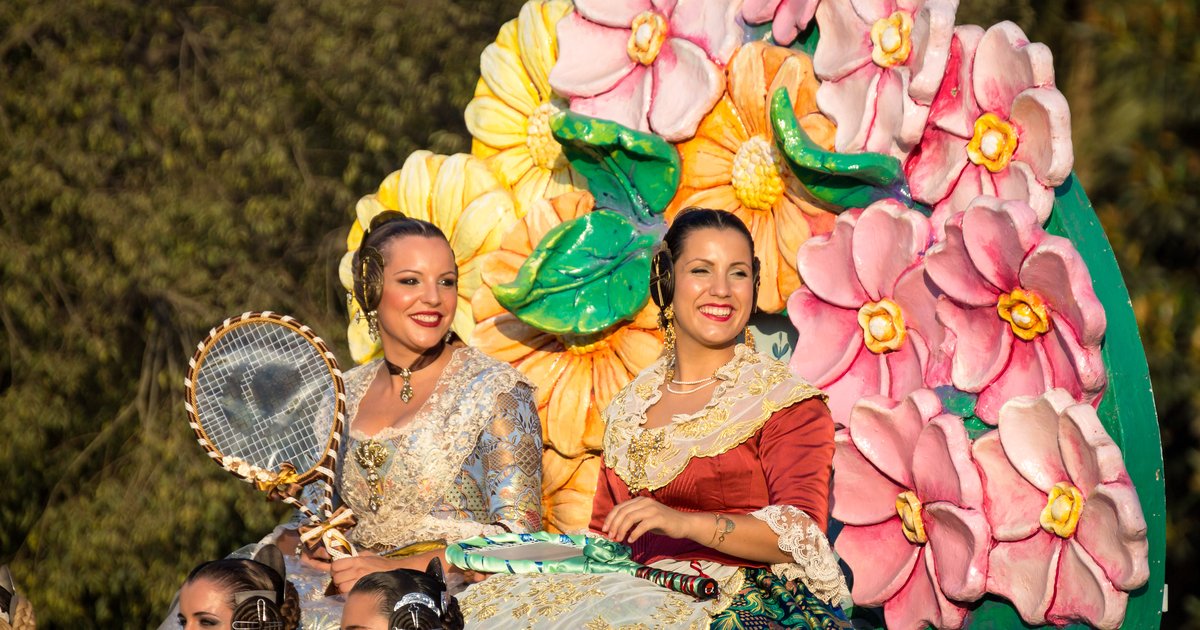
A procession of large floats, each one entirely decorated in flowers and carrying women in traditional Valencian dress, moves slowly down the avenue. The floats and the crowd lining the route then pelt each other with thousands of carnations (some participants use small tennis-style rackets to bat them back) until the whole avenue is buried under a thick, fragrant carpet of petals.
It is free to watch. Seating in the official stands along the Alameda is usually ticketed and sells out, but you can stand along the route for nothing. Arrive early for a good spot, wear clothes you do not mind getting flower-stained, and expect a happy, slightly chaotic scrum once the throwing begins. It is the single event most worth marking in your calendar.
Practical Info
Getting around
The Fira's events are scattered, but almost all are reachable by metro, tram, bus or bike. Viveros is walkable from the old town and close to the Alameda metro stop; the Turia riverbed funfair sits in the green corridor that cuts through the city. Avoid driving to headline events: parking near Viveros, the Alameda and the riverbed is difficult on event nights, and several streets close for parades. The city bike network and Metrovalencia are far less stressful.
Timing and the heat
July in Valencia is hot, regularly into the mid-30s Celsius by day. The Fira is built around this: most events start in the evening, many after 10pm. Plan your day around an afternoon lull and a late, lively night. Bring water; the dry heat sneaks up on you.
Cost
The bulk of the programme (mascletas, fireworks, parades, the Batalla de Flores, many neighbourhood concerts) is free. The main costs are the ticketed Viveros concerts, the bullfighting run, and the funfair (priced per ride). You can have a rich Fira month spending almost nothing.
With kids
The Gran Fira is very family-friendly. The funfair, daytime children's theatre, the parades and the Batalla de Flores all work well for children. The one caveat is timing: many events run late, so the funfair and early-evening shows are the easiest with younger kids.
Language
You do not need Spanish or Valencian to enjoy fireworks, a concert or a flower parade. Event listings and programmes are mostly in Spanish and Valencian, though, so a few words help:
- Fira / Feria: fair, festival
- Focs / Fuegos artificiales: fireworks
- Mascleta: the daytime firecracker show
- Viveros / Vivers: the central park hosting the concerts
- Batalla de Flores: the flower-float parade that closes the Fira
Insider Tips
Check your own neighbourhood's programme
The Fira is not only a city-centre event. Many districts (Russafa, Benimaclet, El Cabanyal and others) run their own concerts, screenings and activities. Some of the best, least crowded evenings are the ones a short walk from home. Look beyond the headline listings.
Stand among the crowd for the mascleta
A mascleta is not a thing you watch politely from afar. The point is the physical sensation: the sound in your chest. Get reasonably close and accept that it will be loud. If you are bringing very young children or are sensitive to noise, stay further back or skip it.
Buy Viveros tickets the day the line-up drops
Headline concerts in Viveros are the one part of the Fira that genuinely sells out. If a particular artist matters to you, do not wait. Everything else can be decided on the day.
Treat the Batalla de Flores as a "wear-old-clothes" event
You will get hit with flowers, and petals stain. Wear something casual you do not care about, bring sunglasses, and if you want to throw back, you can usually buy flowers from vendors along the route.
Embrace the late start
Newcomers often turn up to summer events far too early and wilt in the heat. Valencians do not. Eat late, head out late, and you will both beat the worst of the heat and find the city at its liveliest.
Use the funfair on a weeknight
Weekend evenings at the Turia funfair are packed. A Tuesday or Wednesday early evening is calmer, cooler and far easier with kids.
FAQ
When is the Gran Fira de Valencia 2027?
It runs throughout July. The Conciertos de Viveros take place most nights across the month, and the festival closes with the Batalla de Flores, traditionally on the last Sunday of July. Mascletas, fireworks, parades and neighbourhood events fill the rest of the month, and the funfair stretches into early August. The Ajuntament publishes the day-by-day programme in late June, so confirm exact dates and times there nearer the time.
Is the Gran Fira free?
Mostly, yes. The mascletas, fireworks, parades, the Batalla de Flores and many neighbourhood concerts are free and open to all. The headline concerts in Viveros are ticketed, the bullfighting is ticketed, and the funfair charges per ride.
What is the Batalla de Flores?
It is the festival's traditional finale, held on the last Sunday of July from 20:00: a parade of flower-covered floats down the Paseo de la Alameda, during which the floats and the crowd throw carnations at each other until the avenue is carpeted in petals.
Where are the Gran Fira concerts?
The main concert series is staged in the Jardines de Viveros, the large central park. Smaller concerts and shows take place in plazas and parks across many neighbourhoods through the month.
When are the fireworks?
Fireworks displays are fired late on Saturday nights through July at different points around the city, with a bigger display marking the festival's end. Check the official programme for exact locations and times each weekend.
How is the Gran Fira different from Las Fallas?
Las Fallas in March is an intense, concentrated five-day festival of monuments and fire. The Gran Fira is a relaxed, month-long July programme of concerts, parades and outdoor events. Fallas is a sprint; the Fira is a slow summer marathon.
Is the Gran Fira good for families?
Yes. The funfair, daytime children's theatre, the parades and the Batalla de Flores are all family-friendly. Because many events start late, the funfair and early-evening shows are easiest with young children.
Where can I find the full Gran Fira programme?
The Ajuntament de Valencia publishes the official programme in late June. For an English-language run-through of the highlights, plus every other day's news and events in Valencia, join our free newsletter below.
Daily Valencia news in English. Free.
Join 1,800+ expats across Spain. Every day: a 5-minute summary of Valencia news, free events and local recommendations, including full Gran Fira coverage through July.